

research + writing
Practice-based research and reports that examine emerging forms of public engagement and participation.
-
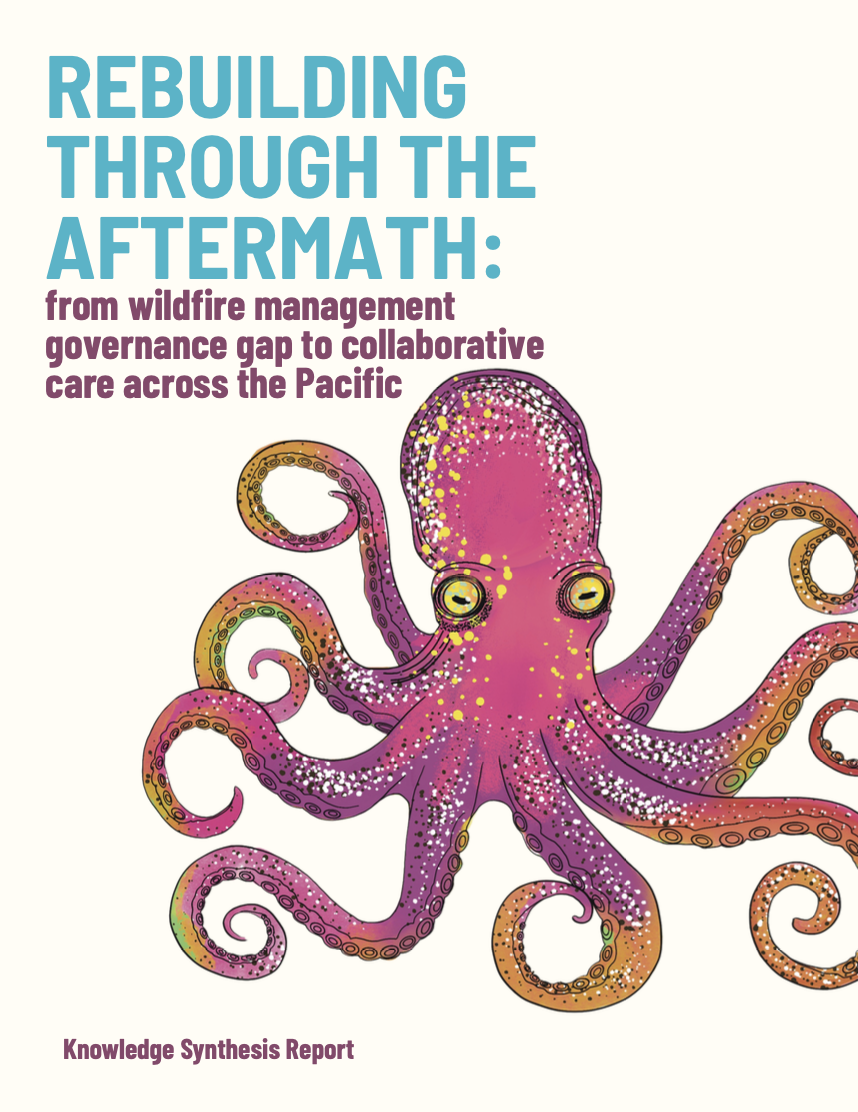
Rebuilding Through the Aftermath: Wildfire Governance, Care, and Climate Futures (2026)
Rebuilding Through the Aftermath is a knowledge synthesis report examining the catastrophic wildfires in Lytton, British Columbia, and Lāhainā, Hawaiʻi, to understand how communities recover, who shapes decisions in the aftermath, and what more equitable, community-centred approaches to wildfire recovery and governance could look like in an era of accelerating climate change.
-
Podcast: Critical Hope is an Action (2026)
An interview with Dr. Tara Mahoney on the Action Research Podcast that explores the concept of Critical Hope and how to find your way when dealing with complexity in climate work and action research. This interview draws from Not All Hope is Created Equal: Climate Action Research as a Source of Critical Hope (Mahoney and Grain, 2025).
-
Climate Resilience Roadmap for Non-Profits: From Crisis to Collective Power (2025)
The Climate Resilience Roadmap for Non-Profits: From Crisis to Collective Power is a practical, community-informed framework designed to help social service organizations anticipate, respond to, and recover from the growing impacts of climate change. Co-created with non-profit organizations in Vancouver’s Downtown Eastside (DTES), the Roadmap translates lived, frontline experience into shared strategies that strengthen collective resilience.
-
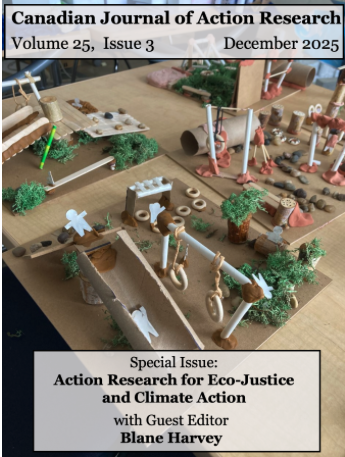
Not All Hope is Created Equal: Climate Action Research as a Source of Critical Hope (2025)
Published in the Canadian Journal of Action Research, this article draws on examples from both inside and outside the academy to explore how climate action research projects contribute to the communication and cultivation of critical climate hope.
-

Podcast: CBC fails to link wildfires to climate change (2026)
Climate change caused by the burning of fossil fuels is making extreme wildfire seasons more common in Canada. But if you were to tune into CBC News, you might not even make the connection.
Tara Mahoney sits down with Desmond Cole to discuss gaps in the public broadcaster’s climate coverage.
-
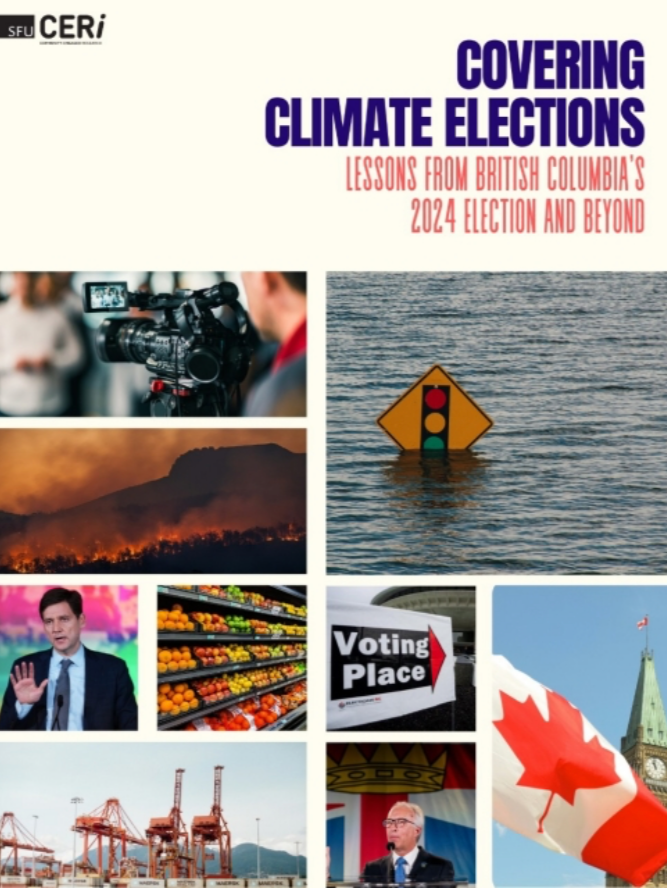
Covering Climate Elections: Lessons From British Columbia’s 2024 Election and Beyond (2024)
This report examines how major broadcast news outlets in Canada covered climate change during the 2024 B.C. Provincial Election, finding that despite the centrality of climate to issues such as affordability, health, and the economy, it was largely overlooked. Based on monitoring conducted by 31 volunteers, the report identifies key gaps in election coverage and outlines 10 actionable recommendations and practical tools to strengthen climate journalism ahead of the 2025 federal election and beyond.
-

Quiet Alarm - A Review of CBC's Climate Reporting (2023)
In the face of the ever-expanding climate crisis, Canadians desperately need their public broadcaster to inform them of its causes, its solutions and the actions they can take to confront it. Quiet Alarm: A Review of CBC's Climate Reporting is a community-engaged research project conducted by CERi in collaboration with the Climate Emergency Unit aimed at improving the climate reporting of the Canadian Broadcast Corporation.
-
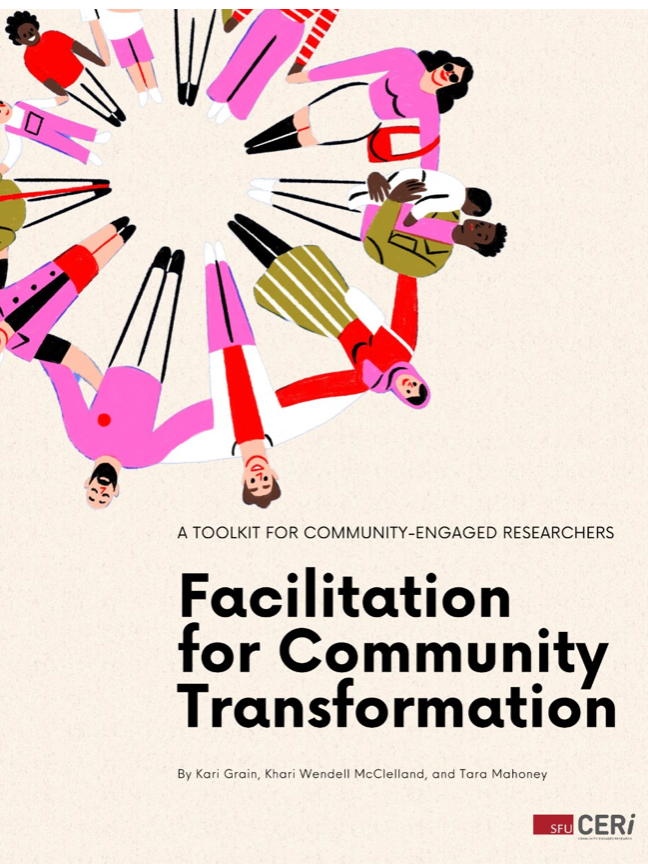
Facilitation for Community Transformation: A Toolkit for Community-Engaged Researchers (2024)
A free and accessible resource for those interested in using facilitation to advance community interests. Whether you're new to facilitation or a seasoned expert, this guide offers valuable insights for community-engaged research and beyond. Perfect for researchers, students, and university leaders, it provides practical advice and strategies for supporting communities through social transformation.
-
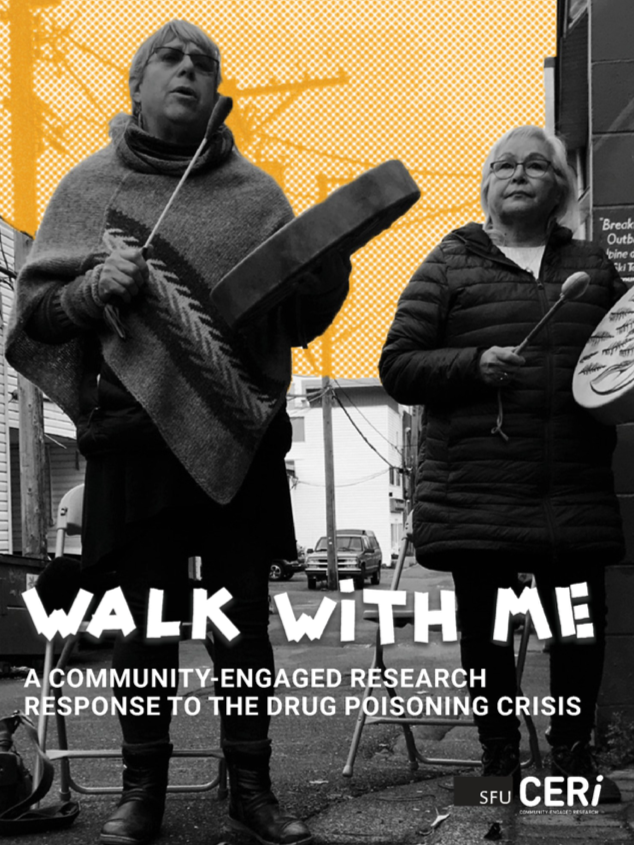
Walk With Me: A Community-Engaged Response to the Drug Poisoning Crisis (2023)
Authored by Dr. Sharon Karsten and edited by Tara Mahoney, this report explores the Walk With Me framework of using story walks, creative practice and sharing circles as a way to mobilize lived experience wisdom within a wider set of research contexts. Ultimately the Walk With Me project and this report aim to support community-driven systems and policy change; and cultivate new understandings and practices of community wellbeing and belonging.
-
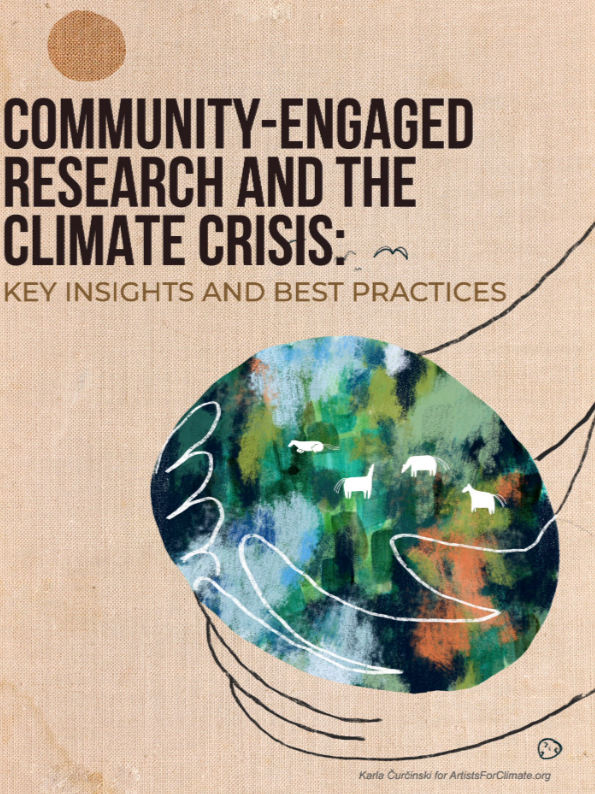
Community-Engaged Research and The Climate Crisis: Key Insights and Best Practices (2023)
Community Engaged-Research and the Climate Crisis: Key Insights and Best Practices documents the collective knowledge that was generated and shared at the Symposium on Community Engaged Research in the Climate Crisis held on October 20th, 2022. The report summarizes ideas and best practices related to three themes: Indigenous sovereignty, storytelling and youth-driven research and engagement for climate justice.
-

A Field Guide to Public Policy Collage (2022)
This zine is a field guide that explores collage as an arts-based method of community-engaged research focused on public policy issues. Theoretical and practical issues are explored; process guide and collaging icons are provided for those wanting to use the method.
-

Horizons: Crisis and Social Transformation in Community-Engaged Research Summary Report (2022)
In May 2022, the Horizons: Crisis and Social Transformation in Community-Engaged Research conference brought together community and university-based researchers, artists, students, and others to share work that responds to the multiple crises now before us. This summary report details the key themes that emerged from the conference, the inspiring work happening across fields and tangible ideas for how to orient ourselves for the work ahead.Download
-
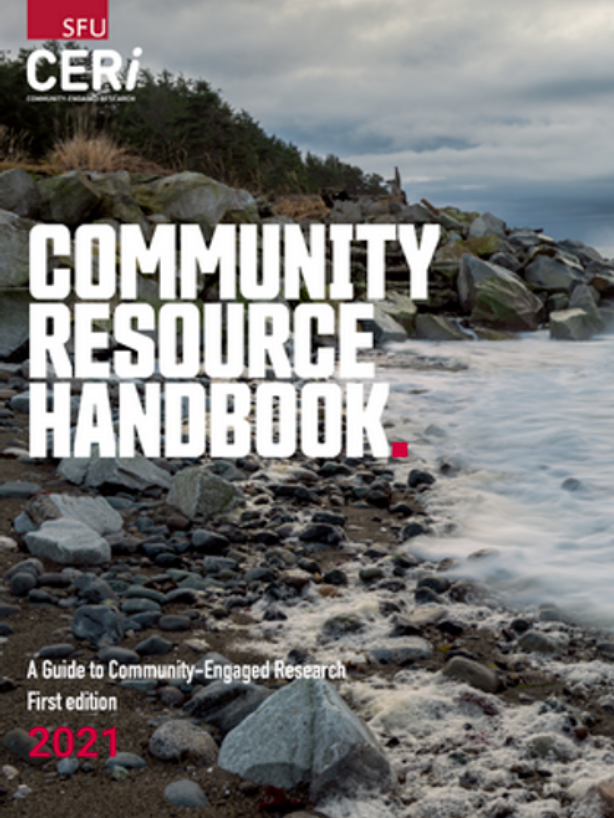
Community Resource Handbook: A guide to Community-engaged research (2021)
This handbook was produced for SFU's Community-Engaged Research Initiative (CERi). It is designed to help community organizations gain a practical understanding of community-engaged research and provide a guiding framework for developing a community engaged research project.
-

Together we Rise: Youth-led Democratic Innovation in Canada (2020)
This report was produced for the youth engagement organization Apathy is Boring and provides recommendations for how youth-serving organizations, governments, public authorities and funders in Canada can support meaningful youth engagement.
-
Collective Grist: Policy Hacking Canada’s Telecommunication Regulator (2020)
This chapter was written for the book 'Creating Spaces of Engagement' (University of Toronto Press) and explores the concept of ‘policy hacking’ which is an approach to media reform that uses citizen-based self-organization to develop policy alternatives. This chapter also won the CRTC Prize for Excellence in Policy Research.
-

Expectation and anticipation: research assemblages for elections (2020)
This article is published in Continuum: Journal of Media and Cultural Studies interrogates how different research assemblages act as affect-enhancing devices for elections by drawing from the 2015 Canadian Federal election.
-
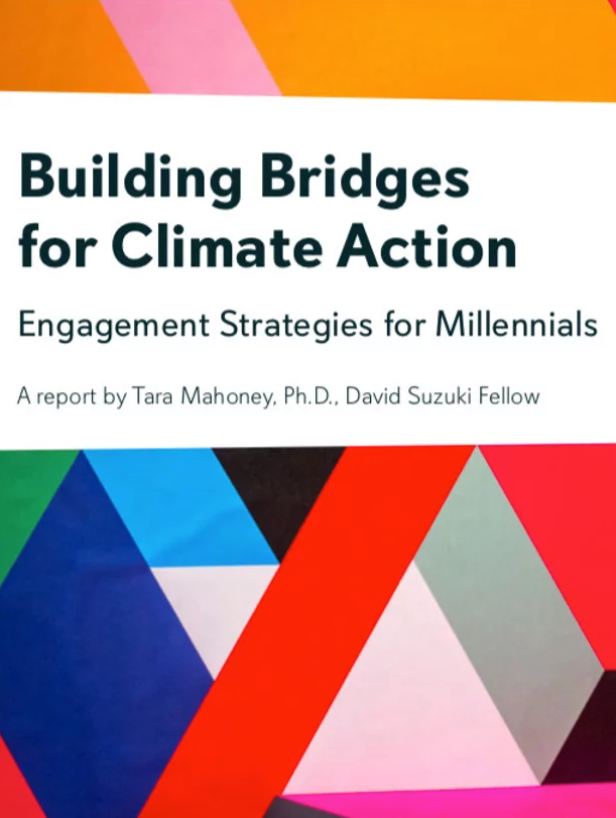
Building Bridges for Climate Action: Engagement Strategies for Millennials (2020)
This report was produced for the David Suzuki Foundation and aims to assist the environmental advocacy community in understanding how millennials engage with climate change in order to help determine what frames, content and engagement projects resonate.
-
Podcast: Social Transformation — with Tara Mahoney (2020)
On this episode of Below the Radar, our host Am Johal is joined by Tara Mahoney, the Research and Engagement Coordinator of SFU’s Community-Engaged Research initiative team (CERi). Tara holds a PhD from SFU’s School of Communications, is also a research fellow in climate change communications at the David Suzuki Foundation and is the creative director of Gen Why Media. She sits down with Am to talk about her research in the recent years, involving the emerging forms of participatory political culture in Canada.
-
Investigating politics through artistic practices (2019)
This article is published in the European Journal of Cultural Studies and interrogates the relationship between affect, artistic practices and participatory politics.
-
Leveraging Neoliberalism: Participatory Politics in Canada (2019)
This PhD dissertation focuses on emerging forms of political culture in Canada with a concern for the relationship between neoliberalism, the theoretical work on participatory politics and developments in practice.
-
CREATIVE PUBLICS: Participatory Political Culture and the 2015 Canadian Federal Election (2017)
This article is published in the art journal PUBLIC and argues for a culture-centric approach to political engagement, and suggests that cultural production should be understood as inseparable from and essential to political participation.
-
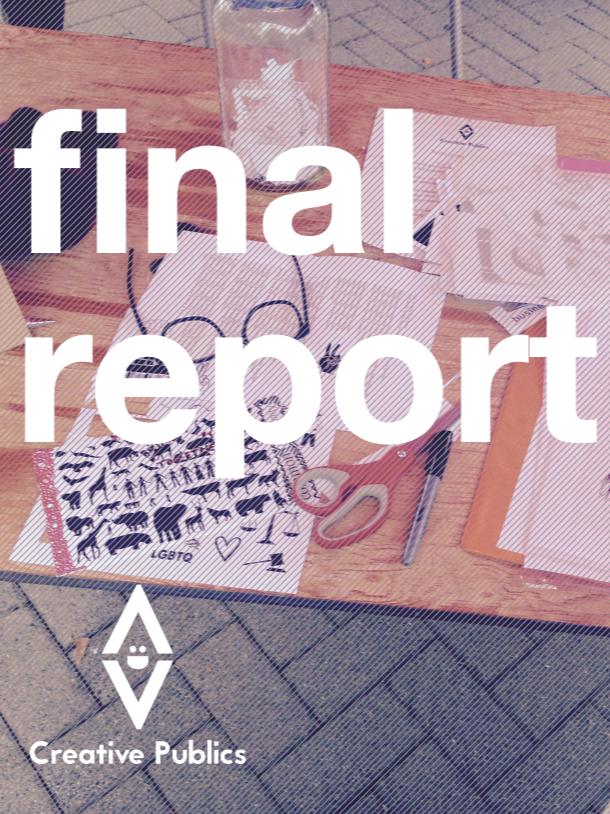
Creative Publics Final Report (2015)
Creative Publics was a roving, pop-up project in Vancouver that combined voter engagement with research on creative political participation, bringing together artists, students, and community members ahead of the October 2015 Canadian federal election.
-

ForGive (2010)
This MA project is a short film that follows former National Chief Phil Fontaine as he
leads a delegation of residential school survivors to a private audience with Pope Benedict XVI. From one figurehead to another, Phil seeks public acknowledgement for the cultural damage caused by the Catholic church’s involvement in the Indian residential school tragedy.